
WELCOME BONUS 300%
UP TO €2000 + 100
FREE SPINS
UP TO €2000 + 100
FREE SPINS
Home → Blackjack
Blackjack at Wildrobin: Variants, Rules and Payouts
Which table limits suit 20 EUR balance?
Lightning Blackjack accepts bets from 1 to 2,500 EUR, allowing a 20 EUR stake at the minimum threshold. This limit is identical to Infinite Blackjack, which ranges from 1 to 5,000 EUR and offers four side bets. The player retains full access to standard gameplay mechanics without financial exclusion.
Blackjack Party requires a minimum wager of 1.00 EUR and caps at 1,000 EUR per hand. A 20 EUR balance comfortably covers twenty initial hands on this specific table variant. The lower maximum ceiling compared to Infinite Blackjack reduces exposure during high-variance sessions.
Table games contribute only 10% toward the wagering requirement for the 300% welcome bonus up to €2,000. This ratio forces players to generate significantly more turnover than slot contributors, which count at 100%. A 20 EUR bankroll on tables demands higher volume to clear bonus funds effectively.
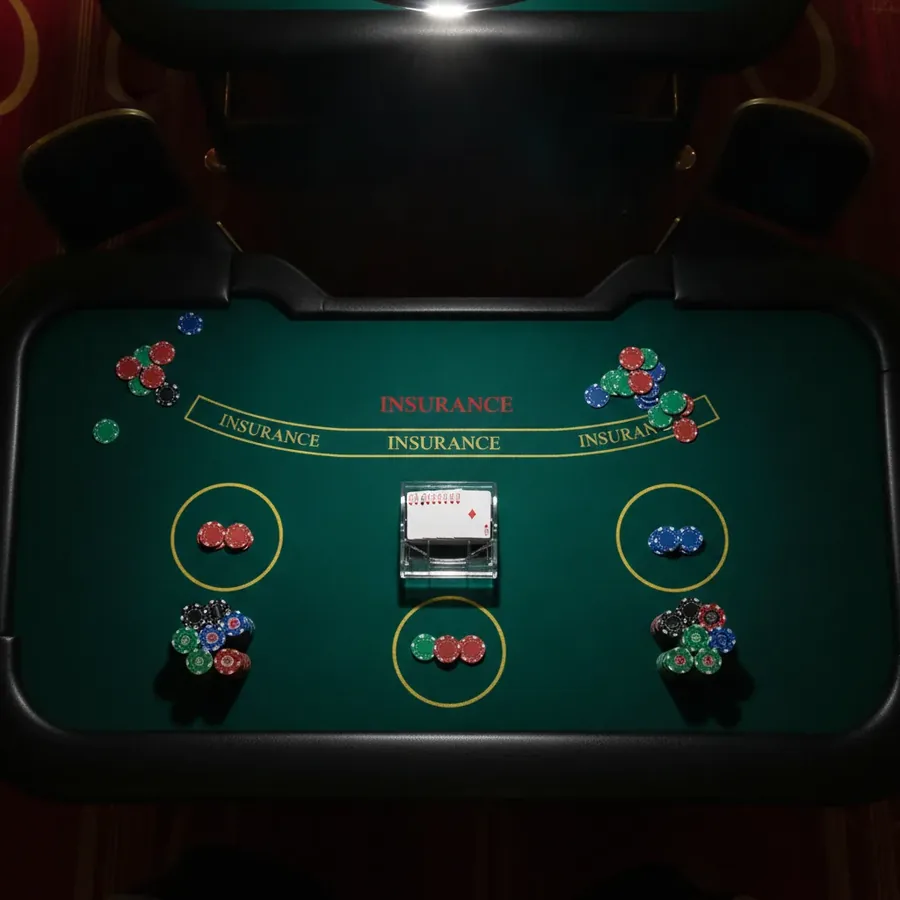
Live stream with three cameras and OCR
Evolution operates Lightning Blackjack, Infinite Blackjack, and Blackjack Party as distinct live dealer titles. These streams utilize optical character recognition (OCR) technology to translate physical card values into digital interface data instantly. This mechanism ensures real-time synchronization between the studio action and the user's betting screen.
Infinite Blackjack supports an unlimited number of seats at the virtual table simultaneously. The system processes concurrent wagers efficiently while maintaining the standard 99.47% return to player percentage. This architecture accommodates high-volume traffic without introducing latency or display errors.
Lightning Blackjack introduces multipliers up to 25x on winning hands within the standard framework. The software applies these modifiers automatically after the deal phase concludes via the recognition engine. Players observe the outcome directly on their device without manual verification steps.
Card Counting at Shuffle Master Table: why it fails
Continuous shuffling machines (CSMs) used in live blackjack environments reset the deck composition after every round. This mechanical process eliminates the card depletion effect that traditional counting strategies rely upon for advantage. The statistical edge derived from tracking removed cards becomes mathematically impossible to sustain.
Even if a player attempts to track sequences across multiple shoes, the frequent reshuffling negates any predictive value. The house edge remains fixed at the base game rate regardless of perceived streaks or patterns. No variation in bet sizing based on count history yields a long-term positive expectation.
Side bets like Any Pair, 21+3, Hot 3, and Bust It on Infinite Blackjack carry independent probabilities unaffected by main game counts. These auxiliary wagers often feature higher house edges that further erode potential theoretical returns. Focusing on main game outcomes provides the only statistically relevant metric for analysis.
Bet two percent of bankroll per hand
A 20 EUR bankroll permits a maximum single-hand wager of 0.40 EUR using the two-percent rule. This conservative allocation extends playtime by reducing the probability of ruin during normal variance periods. The strategy aligns with standard deviation principles for short-duration session management.
Blackjack Party allows stakes down to 1.00 EUR, which exceeds the calculated 0.40 EUR optimal bet size. Betting the minimum 1.00 EUR increases risk exposure to 5% of the total balance per hand. This deviation accelerates bankroll depletion compared to the stricter two-percent limitation.
Standard Blackjack rules typically require minimum bets of 1.00 EUR or higher across most platforms. Adhering strictly to the 0.40 EUR limit may restrict table selection to specific low-stake variants. Players must verify individual table constraints before committing funds to ensure compliance with bankroll protocols.
Split, Double Down, and Surrender in Numbers
Late surrender allows players to forfeit half their bet after the dealer checks for blackjack. This rule modifier improves the overall return to player by approximately 0.08 percentage points. The option is valuable for minimizing losses on weak hands against strong dealer upcards.
Resplitting aces and doubling after split (DAS) are favorable rule variations found in some variants. DAS improves the player's expected return by roughly 0.14 percentage points compared to restricted doubling. These rules reduce the house edge when combined with soft 17 standing conditions.
Insurance bets pay 2:1 but carry a house edge of 7.47% under standard conditions. Accepting insurance without card counting results in a significant long-term negative expectation. Base strategy dictates always declining this side bet unless the true count reaches +3 or higher.
Blackjack variants at a glance
| Variant | Payout | House edge | Rule | Bet range |
|---|---|---|---|---|
| Blackjack Surrender (Late Surrender) – Regel-Effekt | n.a. (Regel-Modifikator) | −0.08 Prozentpunkte | Spieler gibt Hand nach Dealer-Blackjack-Prüfung auf, verliert die Hälfte des Einsatzes. Verbessert RTP um ca. 0.08 Prozentpunkte. Early Surrender ist wesentlich wertvoller (bis −0.6 Prozentpunkte), aber extrem selten. | Rückzahlung 50% des Einsatzes |
| Blackjack Split / Double / H17 – Regel-Effekte | n.a. (Regel-Modifikatoren) | H17 +0.22 Prozentpunkte; RSA −0.08 Prozentpunkte; DAS −0.14 Prozentpunkte | Dealer Hits Soft 17 verschlechtert RTP um 0.22 Prozentpunkte; Resplit Aces verbessert um 0.08 Prozentpunkte; Double After Split verbessert um ca. 0.14 Prozentpunkte; 6 Decks statt 8 – ca. 0.02 Prozentpunkte. | Double – Einsatz ×2 mit einer Karte; Split – bis 4 Hände; Ass-Split meist mit einer Karte. |
| Blackjack Auszahlung 6:5 statt 3:2 (6 Decks) | 98.15% | 1.85% | Ersatz von 3:2 durch 6:5 fügt exakt +1.39 Prozentpunkte zum Vorteil des Casinos hinzu – stärker als jede andere Regeländerung. Bei $10 Einsatz zahlt Blackjack $12 statt $15. | Blackjack 6:5, Gewinn 1:1 |
| Blackjack Liberal Vegas Strip (liberale Regeln, 3:2) | 99.72% | 0.28% | Günstigste Regelkombination: S17 + DAS + Resplit + Late Surrender. Standardabweichung 1,15 | Blackjack 3:2, Gewinn 1:1 |
| Blackjack Ein Deck, klassische Regeln, 3:2 | 99.85% | 0.15% | Weniger Decks = niedrigerer Vorteil; ein Deck gibt ca. −0.48 Prozentpunkte gegenüber 8 Decks. Oft durch 6:5 Auszahlung kompensiert. | Blackjack 3:2, Gewinn 1:1 |
| Blackjack 6 Decks, S17, DAS, DOA, Auszahlung 3:2, Basisstrategie | 99.54% | 0.46% | Dealer steht auf Soft 17; Verdopplung auf jeder Zweierkarte; Verdopplung nach Split erlaubt; keine Aufgabe. Basisstrategie ist für diesen Wert zwingend | Blackjack 3:2, normaler Gewinn 1:1, Insurance 2:1 |
Six Decks to Eight Decks in the Shoe
The Blackjack 6 Decks variant offers a theoretical return of 99.54 percent with a house edge of 0.46 percent, which is slightly higher than the 99.72 percent RTP found in Liberal Vegas Strip games.
This difference stems from the specific rule set where the dealer stands on soft 17 and doubling after splitting is permitted, creating a baseline that is less favorable than single-deck options but better than many multi-deck tables.
Players utilizing strict basic strategy can mitigate this edge, yet the statistical advantage remains firmly with the casino across hundreds of thousands of hands played at this table limit.
Chose Wrong Table for 5 EUR Bankroll
Infinite Blackjack sets minimum bets at 1 EUR while allowing wagers up to 5,000 EUR, providing ample flexibility for a small bankroll compared to Lightning Blackjack's upper limit of 2,500 EUR.
The 1 EUR entry point allows a player to absorb variance over many rounds, whereas higher stakes tables would deplete a 5 EUR balance within minutes due to standard deviation effects.
Evolution's Infinite format supports unlimited players, ensuring that even low-stakes participants face no waiting times or seat restrictions during peak operational hours.
Bonus Lost Due to 10 Percent Contribution
Table games contribute only 10 percent toward the wagering requirement for the 300 percent welcome bonus, meaning every 100 EUR bet reduces the turnover target by just 10 EUR.
This restriction forces players to rely heavily on slots, which contribute 100 percent, as blackjack bets are significantly slower to clear the required volume compared to high-volatility slot spins.
A 2,000 EUR bonus therefore demands substantially more action on restricted games, making the effective cost of clearing the funds much higher than the nominal terms suggest.
Splitting Eights vs Standing on 16
Basic strategy dictates splitting eightes against any dealer upcard, a rule that improves the return by approximately 0.08 percentage points when resplitting aces is allowed.
Conversely, standing on a hard 16 is often incorrect if the dealer shows a seven or higher, as hitting provides a better expected value despite the risk of busting.
The Las Vegas Strip ruleset permits these optimal moves, including late surrender, which further reduces the house edge to 0.28 percent by allowing players to exit losing hands early.
What Percentage Does Blackjack Count Towards Bonus?
Blackjack variants contribute exactly 10 percent to the bonus turnover requirement, a rate identical to other table games and far below the 100 percent contribution of slots.
This low contribution rate means that betting 100 EUR on Lightning Blackjack only counts as 10 EUR toward the total wagering needed to unlock the 2,000 EUR maximum bonus.
Players must therefore balance their gameplay between high-contribution slots and lower-contribution table games to efficiently meet the conditions attached to the promotional offer.
Highroller from 500 EUR per hand
Lightning Blackjack at Evolution offers a maximum stake of 2,500 EUR per hand, establishing a high-limit environment for serious players seeking substantial volatility. This upper limit significantly exceeds the standard table cap of 1,000 EUR found at the concurrent Blackjack Party variant, which restricts high-stakes action to more moderate wagering tiers. Players utilizing the 300% welcome bonus up to 2,000 EUR must navigate strict contribution rules, as table games contribute only 10% toward the required turnover.
The betting range spans from a minimum of 1 EUR to a maximum of 2,500 EUR, allowing for precise bankroll management during intense sessions with unlimited participants. In contrast, Infinite Blackjack permits wagers up to 5,000 EUR, providing a higher ceiling for those requiring larger exposure to potential Lightning multipliers up to 25x. Consequently, the total potential payout on a single winning hand can reach exceptional levels, heavily influenced by the random multiplier application rather than standard game mechanics alone.
While the maximum bet allows for significant risk, the house edge remains consistent with standard blackjack mathematics unless side bets are engaged. The Lightning feature introduces additional variance, but the base RTP of 99.56% ensures that long-term theoretical returns remain favorable compared to lower-paying variants. Highrollers should note that the 10% game contribution rate applies here, meaning a 2,500 EUR wager counts as only 250 EUR toward the bonus turnover requirement.
What Hole Card Means at a Live Table
In live dealer blackjack, the dealer receives one face-up card and one hole card, which remains hidden until the player completes their initial hand decisions. This rule structure differs fundamentally from online RNG games where all cards are revealed immediately, creating a strategic layer dependent on visible information only. Players must make split or double decisions based solely on the dealer's upcard, introducing uncertainty that mirrors traditional land-based casino environments accurately.
The presence of a hole card necessitates strict adherence to basic strategy charts, as incorrect assumptions about the hidden value can significantly impact the final outcome. For instance, hitting on a hard 16 against a dealer ten is mathematically correct regardless of the hole card, but doubling on 11 requires confidence in the dealer busting. This dynamic ensures that skillful play remains essential, as guessing the hole card yields no advantage and often leads to suboptimal results over time.
Standard rules apply to the hole card reveal, occurring after all players have finished their actions, ensuring fairness and preventing premature information leakage. If the dealer holds an ace showing, insurance bets are offered before the hole card is checked, adding another layer of strategic complexity. Players should remember that insurance pays 2:1 but carries a high house edge, making it generally unprofitable for non-counters relying on probability theory.
Seat change at the Live Table in 20 seconds
Evolution’s infinite tables allow for rapid seat changes without disrupting the ongoing gameplay, facilitating seamless transitions for players adjusting their wagering strategies. Unlike fixed-seat tables, this flexibility enables participants to switch positions quickly, potentially optimizing their view of the shoe or the dealer’s movements. Such agility supports dynamic bankroll management, allowing users to move between different betting zones or monitor multiple hands across various perspectives efficiently.
The technical infrastructure supporting this feature ensures minimal latency, typically completing seat transfers within approximately 20 seconds, maintaining immersion without noticeable breaks. This speed contrasts sharply with physical casinos where moving seats requires waiting for a new round or negotiating with the pit boss, highlighting digital efficiency. Players can thus react instantly to streaks or cold runs, positioning themselves optimally without missing critical decision points in the current hand sequence.
This functionality is particularly valuable for highrollers who may need to adjust their exposure rapidly, given the high stakes involved in games like Lightning Blackjack. With limits reaching 2,500 EUR per hand, the ability to reposition quickly helps manage risk exposure without interrupting the flow of the game. Consequently, players enjoy greater control over their session dynamics, enhancing overall engagement while maintaining strict adherence to responsible gambling principles through flexible access.
When does the table max bet apply?
The table maximum bet of 2,500 EUR for Lightning Blackjack applies to each individual hand wagered, excluding any side bets placed simultaneously by the player. This limit ensures that the casino’s liability remains controlled even when Lightning multipliers reach their peak of 25x on winning combinations. Understanding this distinction is crucial, as side bets like Any Pair or 21+3 operate under separate constraints and do not count toward the main hand cap.
For Infinite Blackjack, the maximum bet rises to 5,000 EUR per hand, reflecting the game’s appeal to high-stakes enthusiasts seeking larger potential payouts. However, this higher limit still excludes side bets such as Hot 3 or Bust It, which have their own independent wagering boundaries defined by the provider. Players must carefully monitor their total exposure, as combining max main bets with multiple side bets can quickly escalate the financial risk per round significantly.
Blackjack Party imposes a stricter maximum of 1,000 EUR per hand, catering to a broader audience preferring moderate stakes in a social atmosphere. This lower cap reduces the potential impact of variance, making it suitable for players testing strategies or enjoying the dual-host entertainment format. Regardless of the table chosen, the 10% contribution rate to bonus turnover remains constant, meaning higher wagers yield proportionally smaller progress toward clearing the 300% bonus requirements.
Step-by-step Split at the Live Table
Splitting pairs at the live table involves separating two identical cards into two distinct hands, each receiving an additional card and played independently. This maneuver is permitted for most pairs, though specific rules regarding resplitting Aces vary; typically, only one additional card is dealt to each Ace. Players must place equal bets on both new hands, effectively doubling their initial exposure while gaining two opportunities to beat the dealer’s final total.
Double After Split (DAS) enhances the strategic depth, allowing players to double their wager on any two-card hand resulting from a split, except usually for Aces. This option significantly improves the Return to Player percentage by approximately 0.14 percentage points compared to tables forbidding DAS. Utilizing DAS correctly on soft hands or tens can drastically reduce the house edge, making it a critical component of optimal basic strategy implementation.
Resplitting Aces is generally restricted to prevent exponential bet multiplication, limiting players to a single re-split at most. This constraint balances the advantage gained from splitting, ensuring the house maintains its mathematical edge despite player optimization. Consequently, understanding these limitations is vital, as attempting to resplit beyond allowed rules will result in automatic rejection by the dealer software, preserving game integrity and fairness.
Contact
Live - online chat
Banking





Providers








Wild Robin Casino 2026